
Where Jo Daviess Crime News Appears
Start with the newspaper. The Galena Gazette runs a recurring "For the Record" feature. It pulls together police items, Sheriff calls, warrant news, and transports tied to booking. It carries a publication date, not a full accounting. For the official view, turn to the Sheriff’s official page and its press-release archive. Releases there also cover crashes, traffic enforcement, searches, and other public-safety work. The Jo Daviess County Jail page is separate from all of this news coverage.
Regional media adds another layer. KWQC, KCRG, WGLR, X1071, Radio Dubuque, and NWI Access or Village Voices all report on arrests, warrants, raids, court developments, and agency statements. That matters here. The county has no routine booking feed. Still, check each story for the agency named and the custody state. Articles can stay online long after a release, or after a charge changes.
Here is the "On the Record" stream: NWI Access and Village Voices’ local news section.
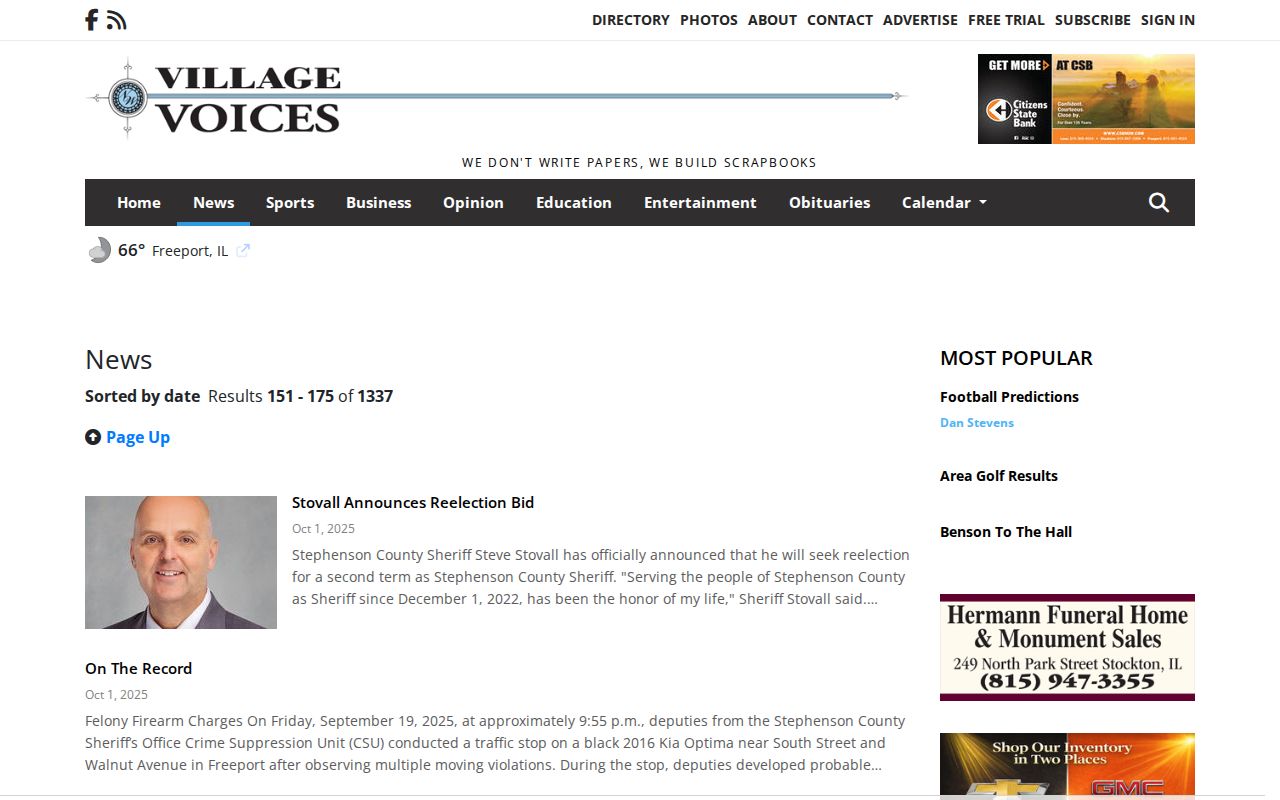
That feed shows a familiar mix. Public-safety items sit right beside ordinary community news. A headline or image can point you to where something happened, but the actual record lives with the agency or court that holds it.
Jo Daviess Outlets and Coverage
The table pairs each outlet with its likely role and its photo practices. "Photos vary" simply means a story might include an image; it is not a verified booking-photo feed. Official agency sources come first. They remain the best way to confirm what was actually released.
| Outlet | Coverage | Photos? | Where |
|---|---|---|---|
| Jo Daviess Sheriff | Search warrants, arrests, enforcement, crashes, and public-safety releases. | Release-specific; no routine photo policy or gallery verified. | Official archive |
| Galena Gazette | Galena Police, Sheriff reports, warrants, calls, and county news. | Inconsistent; do not call an image a booking photo without provenance. | For the Record |
| KWQC TV6 | Regional arrests, searches, raids, warrants, crashes, and court developments. | Agency supplied or illustrative images may appear. | Crime section |
| KCRG TV9 | Regional or syndicated Jo Daviess incident stories. | Image source varies by story. | Hanover example |
| WGLR | Local warrant, apprehension, and Sheriff reporting. | Story-specific, not a booking roster. | News archive |
| X1071 | Local public-safety announcements and arrest-related stories. | Not a consistent photo stream. | Local news |
| Radio Dubuque | East Dubuque and cross-border Dubuque-area incidents. | Agency or illustrative images may be used. | Local archive |
| NWI Access | “On the Record” reports, Stockton items, Sheriff and municipal incidents. | “Photo Provided” does not establish booking provenance. | Stockton archive |
| Third-party directories | Named sites were checked for local coverage and freshness. | Unofficial; Jo Daviess coverage was absent or historical. | Illinois directory and old county index |
News coverage earns its keep as a starting point. It can hand you a date, an agency, and a case name. It cannot stand in for a county roster, and images should never be harvested into a gallery. Where a reported event came from belongs in the note attached to it.
Jo Daviess Weekly Blotter Pattern
There is a real gap between recurring local reporting and a live log. The Gazette’s "For the Record," NWI Access’s "On the Record," and regional radio or television stories offer leads and context, but each stream reflects newsroom judgment. A warrant, a crash, a search, or a prosecution update might make the paper while routine bookings never do.
Publication rhythm is not custody rhythm. An issue can lag the event by a day or more. A web story can also be updated without its address changing, so keep the event date and the publication date apart. And when an article says someone was transported to the Sheriff for booking, that is a report of one moment, not proof the person is still at the county jail. The NWI Access news section from the preceding section shows this weekly, issue-based pattern well; its archive helps locate incidents, but the agency, court, and records unit verify the actual record.
Note: A blotter can be timely and still skip plenty, so "not reported" never means "did not happen."
How Jo Daviess Photos Reach News
Where does a news photo come from? Sometimes an agency release or a Sheriff press contact. Sometimes a court filing, a scene photographer, a stock library, or the publisher’s own camera. Nothing in the Jo Daviess sources suggests a routine booking-photo release program. The Sheriff’s media material can name a person and list charges while showing no photograph, and a city police page may point to social media rather than a daily arrest feed.
Illinois law treats a photograph, when available, as part of arrest information, but that phrasing promises no photo in every release. 5 ILCS 140/2.15 also restricts certain law-enforcement posts on social networks, with public-safety exceptions. The statute does not let a third party mirror images, and a newspaper picture is never an official custody result.
Label images by what the caption actually proves. "Agency-provided image" and "booking photo" are not the same thing. If the origin is unclear, leave the image out of any booking discussion. That keeps a news story, an official record, and a later court outcome in their separate lanes.
Third-Party Jo Daviess Mugshot Pages
Third-party booking-photo sites treat Jo Daviess unevenly, and a visitor should know what each one actually offers. Busted Newspaper has no Jo Daviess entry in its Illinois directory, and its guessed county path leads nowhere local. RecentlyBooked leaves the county off its Illinois list too. Mugshots.com does show a Jo Daviess County index, with city filters for Galena, Stockton, and East Dubuque, but the entries run mainly through 4. That makes it a historical archive, not a current custody roster.
Other aggregators come up just as short. Arrests.org gave no verifiable local Jo Daviess page. Mugshots.zone names selected Illinois counties and skips this one. Illinois Jail Roster and JailExchange carry the county name without demonstrating any county-operated portal. Treat all of these as background at best. An official agency record should always come first.
The RecentlyBooked Illinois directory is embedded below, since its county list visibly omits Jo Daviess.
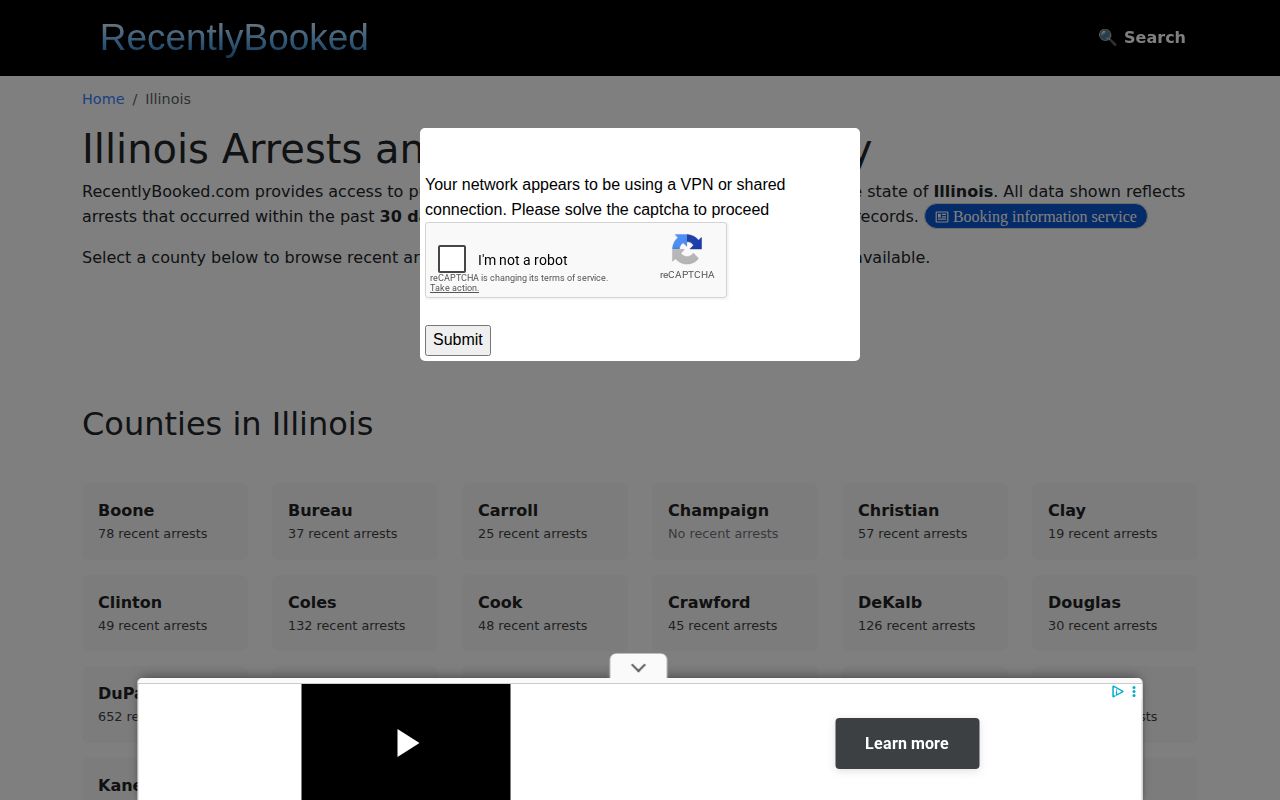
A directory page like that is not a booking result. Before relying on any third-party item, check the source date and the county name on the page itself. No image from an unofficial site is rehosted here.
Need a correction? Start with the agency or court that created the record. Some platforms offer a documented no-fee legal-document process, and that is the next step when one exists. Skip any operator demanding payment for suppression. A platform's policy is not a court order.
From a Story to the Jo Daviess Record
A news story about an arrest is only the opening thread. Jo Daviess County has no verified public booking feed. Same-day feeds are absent, and so are multi-day ones. The route you take depends on which agency made or received the arrest. The county-wide Jo Daviess booking and records path covers the Sheriff FOIA fallback, what custody labels mean, and how state and federal systems differ.
- Save the article URL, headline, publication date, event date, named agency, and exact charge wording.
- Open the official agency release if the article cites one. Record whether it says arrest, booking, transport, warrant, or another event.
- Ask the Sheriff or city police for the underlying report or booking record when no public source supplies it.
- Check Judici for the matching court case, using case number, agency, date, and other identifiers instead of a name alone.
- Record the later disposition separately. A dismissal, amended charge, plea, or other outcome does not rewrite the original source, but it changes what a reader should conclude.
Headlines mark the start of a record search, not the end of one. The documents that follow are where the real answers sit.
Careful reading matters at every step. A story saying someone was released is not a court disposition. If no docket is available, say exactly that. When the name match is shaky, keep the records apart rather than merging them. Custody-state labels belong to the agency, court, or government page that holds them. Someone sentenced to the Illinois Department of Corrections sits in a different custody system entirely from the Jo Daviess County Jail.
Jo Daviess Court Follow-Up
Booking is only the first entry in a longer record. The Sheriff or police agency describes the arrest event itself. The State's Attorney may announce prosecution developments. Public case activity and any dispositions live with the Circuit Clerk and Judici. Each source covers a different stage. So a delay or a missing case tells you nothing final.
The Circuit Clerk page gives the courthouse route and points to Judici. Use it to check for later results. When you write about a case, keep the original news wording and the court outcome in separate sentences. A docket can show a dismissal long after a story spread. A sealed matter may never appear at all.
The same care applies when a publisher runs a supplied photo. A photo shows how an agency presented an event, nothing more. Follow the court stage. Preserve the source date. Send corrections to the agency or court that controls the record.
City Crime Coverage in Jo Daviess
Each city has its own news anchors. Galena reporting leans on the Galena Gazette and the city police source. Stockton has a dedicated NWI Access archive and turns up in countywide or regional reports. East Dubuque reaches the Dubuque market through Radio Dubuque and other regional publishers. None of the three city police sites offers a verified public booking-photo feed.
The Galena Busted Mugshots page breaks down the county-seat records split, but the Sheriff and court routes remain the verification paths for any city incident. A city label in a news story does not prove a municipal jail holds the person or that a county booking happened. Always check the named agency and its custody source.
Multi-agency investigations add another layer. Identify every participating agency the source names, because the Sheriff, city police, Illinois State Police, and regional partners may each hold different records. One story can require several requests.